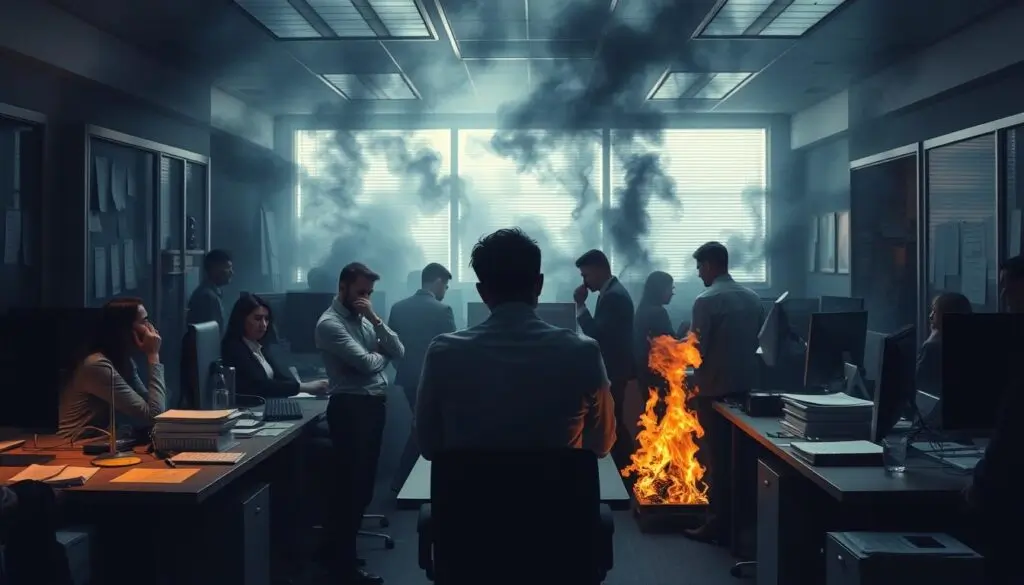
Workplace OH&S television and radio campaigns typically focus on physical accidents at work. A campaign by WorkSafe Victoria highlighted the issue of workplace violence towards staff by customers. However, there is less emphasis on the mentally unsafe work environments imposed on workers by employers, namely workplace psychosocial hazards.
Workplace safety is not just about physical dangers. Working in psychosocial hazardous conditions can mean working in an unsafe workplace. Did you know a shocking statistic shows that 83% of US workers deal with work-related stress, and workplace psychosocial hazards lead the cause?
Similar trends are observed in Australia, where workplace stress and psychosocial risks significantly impact employee well-being and productivity, making them a major issue in today’s workplaces. These risks extend beyond physical safety and include factors like heavy workloads, poor communication, workplace bullying, and inadequate support systems. Workplace mental health and safety are linked to employee wellbeing and success. Ignoring these risks can harm an organisation’s productivity and employee happiness, with mental health issues costing Australian businesses $6 billion annually.
The “Managing Psychosocial Hazards at Work Code of Practice 2024” addresses these critical concerns by outlining the various dangers present in the workplace that can impact our well-being. This article will show you ways to spot these risks and what you can do to help yourself and your colleagues.
Stay safe at work!
Key Takeaways
- Stress, bullying, and job worries can harm our minds and bodies. We need to find these problems early.
- Employer’s addressing these hazards is a legal requirement and essential for maintaining a healthy work environment.
- Talking to others, using stress tools, and having good habits help us deal with work stress.
- Companies should check for risks and have plans to keep the workplace safe. This includes teaching staff how to handle stress.
- Real stories show that when workplaces focus on mental health, employees feel better and less stressed.
- There are many resources online for learning about keeping our minds safe at work.

The Evolution of Workplace Hazards
Workplace safety has changed dramatically in the last few decades. Our grandparents worried about getting physically hurt at work, but we face a different challenge today: workplace psychosocial hazards.
Historical Viewpoint
Physical risks dominated workplace hazards before psychological ones became a concern. Safety measures in the workplace focused only on preventing injuries before the 1970s. The situation reached a crisis point in the 1960s when 14,000 US workers died yearly, and 2.2 million couldn’t work because of injuries and illnesses. This crisis pushed authorities to create complete safety regulations that started a new chapter in workplace safety.
Current State
Psychosocial safety in the workplace is receiving unprecedented attention today. For example, in August 2024 the Victoria Government Solicitor’s Office published the much anticipated proposed Regulations that is expected to clarify the existing employer duty concerning the management of workplace psychosocial hazards.
New hazards have emerged in our digital era, as shown by data where one in seven Australians use technology to harass co-workers. Workers face several key challenges, including:
- Digital overload affects 80% of Australian workers.
- Men account for 24% of tech-based harassment while women account for 7%.
- Almost one-third of Australians feel lonely:
- 11% of lonely individuals reporting absenteeism compared to 8% of those who are not lonely.
Exploring the Definition and Scope of Psychosocial Hazards in the Workplace
To protect ourselves as employees, we first need to understand psychosocial hazards. These hazards cause stress and harm our health. Knowing about them helps improve work environments and keep employees mentally safe in the workplace.
Taking care of your mind is just as important as taking care of your body.
What are Psychosocial Hazards?
Workplace psychosocial hazards involves the way work is organised and managed, particularly how work conditions interact with personal thoughts and feelings. When negative interactions occur between work conditions and individual responses, such as job insecurity and poor support (more types below), it can result in psychological harm. This may include issues like stress, anxiety, depression, extreme fatigue, and, in extreme cases, even death.
It’s important to understand psychosocial risks in different workplaces. Studies show that these risks vary significantly across different workplaces, impacting how they are managed.
Understanding the Difference: Psychological vs. Psychosocial Hazards
In the realm of workplace health and safety, the terms “psychological hazards” and “psychosocial hazards” are often used interchangeably.
Psychological hazards refer to workplace factors that have the potential to harm an individual’s mental health and well-being. These hazards primarily focus on the internal, cognitive, and emotional experiences of workers.
Psychosocial hazards, on the other hand, encompass a broader scope. They refer to the interactions between psychological and social factors in the work environment that can affect both mental and physical health.
Types of Workplace Psychosocial Hazards
- Role conflict and role ambiguity that may cause stress and uncertainty at work.
- Workplace bullying or harassment, leading to anxiety and a toxic work culture.
- High demands juxtaposed with low decision-making autonomy.
- Lack of support from supervisors and peers, which can intensify workplace pressures.
- Long hours and work-life balance problems, leading to strained relationships and burnout.
- Bad change management practices that can cause confusion, decreased morale and increased stress.
- Job insecurity and changes in employment conditions without prior consultation, almost always increasing anxiety.
A future article will discuss types of hazards in more detail.
Identifying the Signs: How Psychosocial Hazards at Work Affect Employee Well-being
It’s important to understand psychosocial hazards to create a safer work place. By spotting job strain factors and tackling mental health risks, employers can boost worker happiness and productivity.
| Psychosocial Hazard | Physical Symptoms | Mental and Emotional Symptoms |
|---|---|---|
| High Workload | • Fatigue • Headaches • Muscle tension | • Stress • Anxiety • Difficulty concentrating |
| Job Insecurity | • Sleep disturbances • Digestive issues • Increased susceptibility to illness | • Worry • Low morale • Decreased job satisfaction |
| Poor Work Relationships | • High blood pressure • Chest pain • Sweating | • Irritability • Feelings of isolation • Depression |
| Lack of Control | • Muscle tension • Fatigue • Weakened immune system | • Frustration • Helplessness • Low self-esteem |
| Work-Life Imbalance | • Exhaustion • Changes in appetite • Neglect of personal health | • Burnout • Resentment • Guilt |
Knowing is half the battle.
Physical Symptoms of Psychosocial Hazards
Physical manifestations of psychosocial hazards in the workplace are readily observable and can significantly impact an individual’s well-being. These manifestations encompass persistent fatigue, frequent headaches, and muscular tension.
Additionally, individuals may experience stomach-related issues such as nausea or gastrointestinal discomfort, as well as sleep disturbances characterised by difficulty falling asleep or recurrent awakenings. It is not uncommon for individuals to exhibit elevated blood pressure and increased susceptibility to illness.
Expressions like “I feel drained”, “I feel exhausted”, and “my mind won’t switch off” often serve as indicators of these symptoms, although many may not realise their connection to psychosocial hazards.
The identification of these physical symptoms is crucial as they likely signify the presence of workplace stress and underscore the need for remedial measures to foster a healthier work environment.
Mental and Emotional Signals of Psychosocial Hazards
There are various indicators that may signal the presence of mental health risks resulting from work-related stress, often overlooked.
Frequently experiencing a persistent sense of being overwhelmed or feeling incapable of coping is a common sign. Excessive concerns about work or prolonged periods of sadness accompanied by a loss of interest in previously enjoyable activities can also provide significant clues. Additional signs include hard to concentrate, emotional exhaustion, detachment from work and colleagues, and decreased motivation.
It is important to note that showing signs of burnout, which manifests as extreme physical, emotional, and mental exhaustion, is a severe consequence of chronic stress. Trouble sleeping, like not being able to fall asleep or waking up a lot, makes these problems even worse.

Why Employees Stay Silent About Psychosocial Hazards and the Vicious Cycle
Consider the following example: You’re feeling stressed from work, run-down, and overwhelmed (‘over it!’). Unbeknownst to you, you have been working in a psychosocially hazardous environment. The most common reaction is to quit because you found a new job, or perhaps so done with it that you quit with no job to go to.
- Had you even heard the term ‘psychosocial hazard’ before now? Most people we ask haven’t so you’re not alone. How would you know to report this OH&S issue if you have never even heard this term?
- We’ve been encouraged to leave a workplace on a good note, so why would you say anything negative during your exit interview?
Unfortunately, this is the setup for the next unsuspecting hire to be traumatised. Employer and management practices don’t change. As far as they’re concerned “you quit for more money”, or “you couldn’t handle the job”, or “this place isn’t for everyone”.
Employers must legally manage workplace risks, including psychosocial ones.
It is clearly reasonable and understandable employees don’t speak up due to reasons that include:
- Employees are unaware about unsafe workplaces due to psychosocial hazards, the employer’s legal responsibility around this.
- Fear of retaliation from their employer or colleagues is a significant concern, as they worry about potential job loss, demotion, or being ostracised at work.
- Employees may feel that reporting to HR is pointless if they perceive the department as biased or ineffective in addressing issues.
- Discussing grievances with friends or family can also be challenging, as employees might feel embarrassed or fear being judged for their inability to handle workplace problems.
Managing workplace psychosocial hazards starts with good psychosocial risk assessment processes. These assessments help spot stress sources and prevent them. Companies that care about their employees’ mental safety can use tools like the People at Work tool to manage these risks well – a topic for another time.
Reporting Psychosocial Hazards Including Employee Rights and Legal Framework
Australia has a strong legal framework for managing psychosocial hazards at work. It’s based on the Work Health and Safety Act 2011 (WHS Act). This law makes sure workplaces are safe for both physical and mental health. It sets high standards for comprehensive workplace health and safety measures.
Work Health and Safety Act 2011 Overview
The WHS Act defines ‘health’ to include physical and mental well-being. It’s key in ensuring effective workplace support systems. It requires businesses to work with employees to find and manage psychosocial hazards. These can include job demands and workplace relationships.
The Act also has Part 3.2 Division 11 rules 55A to 55D. They guide on managing psychosocial risks. They focus on the severity, frequency, and duration of exposure to hazards. I Need to write about laws and ability to speak up.
This combination of fear, perceived ineffectiveness, and personal discomfort often discourages employees from voicing their concerns.
How to Safely Report Workplace Psychosocial Hazards
Reporting psychosocial hazards in the workplace is crucial for maintaining a healthy and safe workplace environment for everyone. Australian employees who believe they are working in conditions that pose psychosocial risks, such as stress, bullying, or harassment, have several avenues to report these issues and are protected under Australian law.
In our experience, the most crucial tool is documenting interactions that negatively impact how you or others feel, including the time and date. While these interactions may be considered standard business interactions by your employer or manager and may be attempted to be justified, they may also be viewed differently by external parties and under Australian law.
Reporting to Your Employer
The first step in addressing psychosocial hazards is to report them to your employer. Employers in Australia have a legal obligation under the Work Health and Safety (WHS) Act 2011 to ensure the health and safety of their workers. This includes managing risks related to psychosocial hazards. Employees should document their concerns and communicate them to their direct supervisor, HR department, or through any formal reporting mechanisms provided by the employer.
Reporting to Government Bodies
If the issue is not resolved internally, employees can escalate their concerns to relevant government bodies. Safe Work Australia is the national policy body responsible for WHS and workers’ compensation. Each state and territory also has its own regulatory body that can investigate and address workplace safety concerns:
- SafeWork NSW (New South Wales)
- WorkSafe Victoria (Victoria)
- Workplace Health and Safety Queensland (Queensland)
- SafeWork SA (South Australia)
- WorkSafe WA (Western Australia)
- WorkSafe Tasmania (Tasmania)
- NT WorkSafe (Northern Territory)
- WorkSafe ACT (Australian Capital Territory)
These bodies can provide guidance, conduct investigations, and enforce compliance with WHS laws. Most of these regulatory bodies allow you to report your psychosocial concerns anonymously, allowing for an investigation to potentially take place and help not only yourself, but your colleagues and future employees.
Legal Protections for Employees Reporting Psychosocial Hazards
Australian employees are protected under the Fair Work Act 2009 and the Public Interest Disclosure Act 2013 when reporting unsafe work conditions. These laws protect employees from adverse actions, such as dismissal or discrimination, as a result of making a complaint or providing information about workplace hazards. Employees can also seek advice and assistance from the Fair Work Ombudsman if they face retaliation for reporting psychosocial hazards.
Sources and Further Reading
- Safe Work Australia
- Fair Work Ombudsman
- Work Health and Safety Act 2011
- Public Interest Disclosure Act 2013
By understanding and utilising these resources, Australian employees can take proactive steps to report psychosocial hazards and ensure their workplace is safe and supportive.
 WorkWell Matters: Where Working Well Matters Matter!
If you feel like you need to talk with someone, need a listening ear, don’t want feel alone, then schedule a call with one of our listeners. Bookings available on our home page. Why not tell someone who cares, literally!
share this post: